March 15, 2026 · Infrastructure · San Diego, CA
Pacific Beach Boardwalk Renovation Project Gets Green Light
After years of community debate and three rounds of public design review, the Pacific Beach boardwalk renovation has received final approval from the California Coastal Commission, clearing the last regulatory hurdle for a $42 million transformation of one of San Diego's most beloved and heavily used oceanfront corridors.
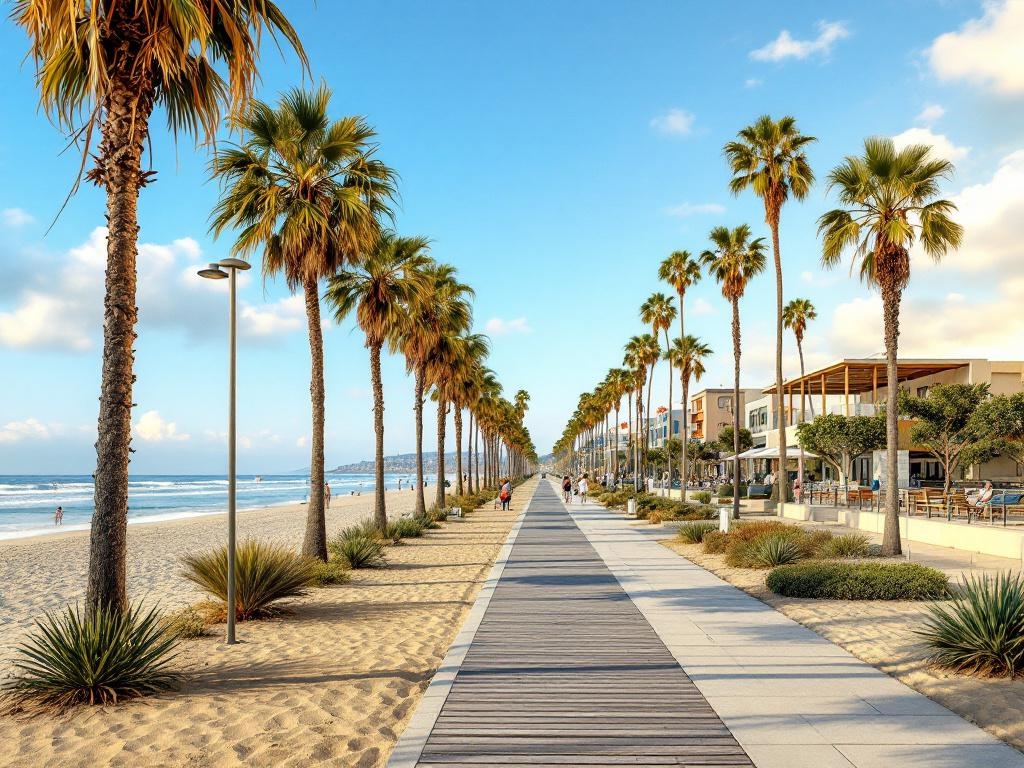
The project will completely rebuild the 3.2-mile boardwalk from Tourmaline Surfing Park in the north to the Mission Bay channel jetty in the south, addressing crumbling infrastructure, dangerous pedestrian-cyclist conflicts, and ADA accessibility deficiencies that have plagued the aging pathway for over a decade.
Wider Paths and Separated Traffic
The centerpiece of the redesign is a complete rethinking of how pedestrians, cyclists, and other boardwalk users share the space. The current boardwalk is a single 12-foot-wide concrete path where walkers, joggers, cyclists, skateboarders, and electric scooter riders compete for space — a configuration that generates hundreds of collision reports annually and prompted a temporary speed limit ordinance in 2024.
The new design creates three separated zones: a 10-foot pedestrian promenade on the ocean side, a 10-foot protected bike lane on the inland side with physical barriers, and a 6-foot buffer zone between them featuring landscaping, seating areas, and public art installations. The total width expands from 12 feet to 28 feet, achieved by extending the boardwalk's footprint slightly toward the beach using elevated deck sections that preserve sand access.
"This design was born from hundreds of community conversations," said project lead architect Maya Rodriguez of Studio E Architects. "PB residents told us they love the boardwalk but they've stopped using it because it doesn't feel safe. We're giving it back to everyone."
Protected Bike Infrastructure
The separated bike lane represents a significant upgrade for Pacific Beach, which has the highest cycling mode share of any community in San Diego at 8 percent. The lane will feature smooth, colored pavement distinct from the pedestrian surface, clear directional markings, and raised concrete curbs separating it from the walking path.
At the five major cross-street intersections — Tourmaline, Law, Grand, Thomas, and Ventura — the design includes raised crosswalks with automatic detection signals that alert cyclists to pedestrian crossings. These intersections have historically been the most dangerous points on the boardwalk, accounting for over 60 percent of reported collisions.
Public Art and Lighting
The renovation includes a $3.5 million public art program featuring 12 permanent installations by local and regional artists. The art program, curated in partnership with the San Diego Commission for Arts and Culture, will include sculptural benches, mosaic pathways, interpretive panels about PB's surfing heritage, and a major gateway sculpture at the Crystal Pier entrance.
New LED lighting throughout the boardwalk will replace the existing inconsistent illumination, with fixtures designed to provide safety lighting for evening users while minimizing light pollution that affects nesting shorebirds. The lighting system includes smart sensors that adjust brightness based on time and usage levels.
Critical Seawall Repairs
Beneath the surface improvements lies the project's most urgent component: comprehensive repairs to the seawall that protects oceanfront properties from storm surge and wave damage. The existing seawall, constructed in phases between 1958 and 1972, has deteriorated significantly, with engineers rating 40 percent of its length as "structurally deficient."
The renovation will rebuild 1.4 miles of seawall using modern reinforced concrete with enhanced corrosion-resistant rebar, raising the wall height by 18 inches to account for projected sea level rise through 2070. The seawall work represents $18 million of the total project budget and is considered critical infrastructure regardless of the boardwalk surface improvements.
Construction Timeline and Community Impact
Construction is scheduled to begin in October 2026, timed to start after the peak summer season. The project will be built in four segments over 30 months, with each segment maintaining at least one passable lane for pedestrians and emergency vehicles. Full completion is targeted for April 2029.
Funding comes from a combination of federal infrastructure grants ($15 million), TransNet local transportation funds ($12 million), the city's capital improvement program ($10 million), and a Coastal Conservancy grant for the seawall and habitat restoration components ($5 million).
The Pacific Beach Town Council, which has been involved in the design process since 2022, endorsed the final plan unanimously. "This boardwalk is PB's living room," said Town Council president David Mitchell. "We're finally treating it like one."